
Nexott PVR Review: Transform Your Digital Marketing Campaigns with Performance Analytics

Table of Contents
In today’s hyper-competitive digital landscape, guessing is not a strategy. Marketing teams need precise, real-time data to understand what drives conversions and revenue. Enter performance validation and reporting tools, a critical software category for modern agencies. This comprehensive guide dives deep into Nexott PVR, a leading platform designed to eliminate guesswork. We’ll explore its features, benefits, and practical applications to help you decide if it’s the key to unlocking your marketing potential.
What Is Nexott PVR?
Nexott PVR stands for Performance Validation and Reporting. It is a sophisticated software platform built to track, analyze, and validate the performance of digital marketing campaigns. It goes beyond basic analytics by connecting ad spend directly to tangible business outcomes. The core mission is to provide unambiguous proof of what marketing efforts are genuinely working. This empowers businesses to make data-driven decisions with confidence.
Core Function and Purpose
The primary function is to serve as a single source of truth for marketing performance. It aggregates data from various channels like Google Ads, Facebook, and email platforms. Nexott PVR then cleans and correlates this data with backend conversion events. This process delivers clear, actionable insights into return on investment (ROI) and customer acquisition cost (CAC).
Who Should Use Nexott PVR?
This tool is invaluable for digital marketing agencies managing multiple client accounts. E-commerce brands running large-scale paid advertising campaigns will also benefit greatly. Furthermore, in-house marketing teams at SaaS companies or lead-generation businesses find it essential. Any organization spending over $5,000 monthly on ads should consider a robust PVR solution like Nexott.
Summary: Nexott PVR is a dedicated performance validation platform. It connects marketing spend to revenue, providing clarity and accountability for digital campaigns.
How Does a PVR System Like Nexott Work?
The system operates on a fundamental principle: attribution and validation. It uses advanced tracking and data integration to paint a complete picture. Here’s a breakdown of the core mechanics.
Data Integration and Tracking
First, Nexott PVR integrates with your advertising platforms via API connections. This includes Google Ads, Microsoft Advertising, Meta Ads, and more. It also connects to your website via a tracking pixel or tag manager. Finally, it integrates with your CRM, payment processor, or booking system to capture conversion value.
The Attribution and Correlation Engine
Once data flows in, the software’s engine goes to work. It matches ad clicks and impressions to specific user sessions on your website. It then tracks those users through their journey to a conversion event, such as a purchase or sign-up. Nexott PVR attributes the revenue from that conversion back to the originating ad campaign and keyword.
Reporting and Visualization
The processed data is presented in intuitive dashboards and reports. Users can see metrics like true ROI, profitable keywords, and underperforming ad sets. Customizable reports can be automated and sent to stakeholders. This transforms complex data into simple, visual stories anyone can understand.
Expert Insight: “The magic isn’t in collecting data, but in connecting disparate data points. A true PVR like Nexott closes the loop between marketing activity and business revenue, which most analytics tools fail to do completely.” – Senior Marketing Technologist.
Key Features and Benefits of Using Nexott PVR
Choosing the right tool requires understanding its capabilities. Nexott PVR is packed with features designed to save time, increase accuracy, and boost profits.
Campaign-Specific Call Tracking
One standout feature is dynamic call tracking. It assigns unique phone numbers to different marketing campaigns. This allows you to track which ads drive phone calls, a crucial conversion path for many businesses. Call recordings and analytics provide deeper insights into customer intent and quality.
Multi-Touch Revenue Attribution
Unlike last-click attribution, Nexott PVR employs sophisticated multi-touch models. It understands that a customer might interact with several ads before converting. This gives credit to all contributing campaigns, providing a fairer view of what nurtures leads. You can then optimize your full funnel, not just the final touchpoint.
Automated Profitability Reporting
Manually calculating profit per campaign is tedious and error-prone. Nexott automates this by factoring in your product costs, overheads, and ad spend. Daily or weekly profit reports show exactly which campaigns are making or losing money. This allows for rapid budget reallocation to maximize overall returns.
| Feature | Nexott PVR | Google Analytics (Standard) |
|---|---|---|
| Primary Goal | Validate Profit & ROI | Track Website Behavior |
| Revenue Attribution | Multi-Touch & Custom Models | Primarily Last-Click |
| Data Integration | Ads, CRM, Payment Processors | Web & App Data |
| Call Tracking | Built-in & Dynamic | Requires 3rd-Party Tool |
| Report Focus | Profit, CAC, ROAS | Sessions, Bounce Rate, Goals |
- Benefit:Eliminates Data Silos. By combining ad platform data with actual sales data, you get a unified view.
- Benefit: Improves Agency-Client Trust. Transparent reporting proves value and justifies marketing spend.
- Benefit: Enables Scalable Growth. Knowing exactly what’s profitable allows you to confidently scale winning campaigns.
Nexott PVR Use Cases Across Different Industries
Different industries have unique reporting requirements, and one of the biggest strengths of Nexott PVR is its ability to adapt to those needs. Rather than serving only one type of business, the platform provides flexible performance validation tools that help organizations understand where their marketing budgets produce measurable results.
For e-commerce businesses, Nexott PVR helps identify which campaigns generate the highest revenue instead of simply attracting the most visitors. Marketing managers can quickly compare advertising costs against actual sales, making it easier to pause underperforming campaigns and scale profitable ones.
Digital marketing agencies benefit from Nexott PVR by providing transparent reporting to clients. Instead of manually creating reports from multiple analytics platforms, agencies can automate dashboards that clearly demonstrate return on investment, conversion trends, and campaign profitability. This level of transparency strengthens client relationships and simplifies monthly reporting.
Software-as-a-Service (SaaS) companies also gain valuable insights from Nexott PVR. Since customer acquisition often involves multiple marketing touchpoints, advanced attribution models help marketers understand which channels contribute most throughout the buying journey rather than focusing solely on the final conversion.
Lead-generation businesses, healthcare providers, real estate agencies, and professional service firms can also use Nexott PVR to validate phone calls, appointment requests, and qualified leads. By connecting marketing data with CRM systems, businesses gain a complete understanding of campaign performance from the first advertisement to the final conversion.
How to Get Started with Nexott PVR: A Step-by-Step Guide
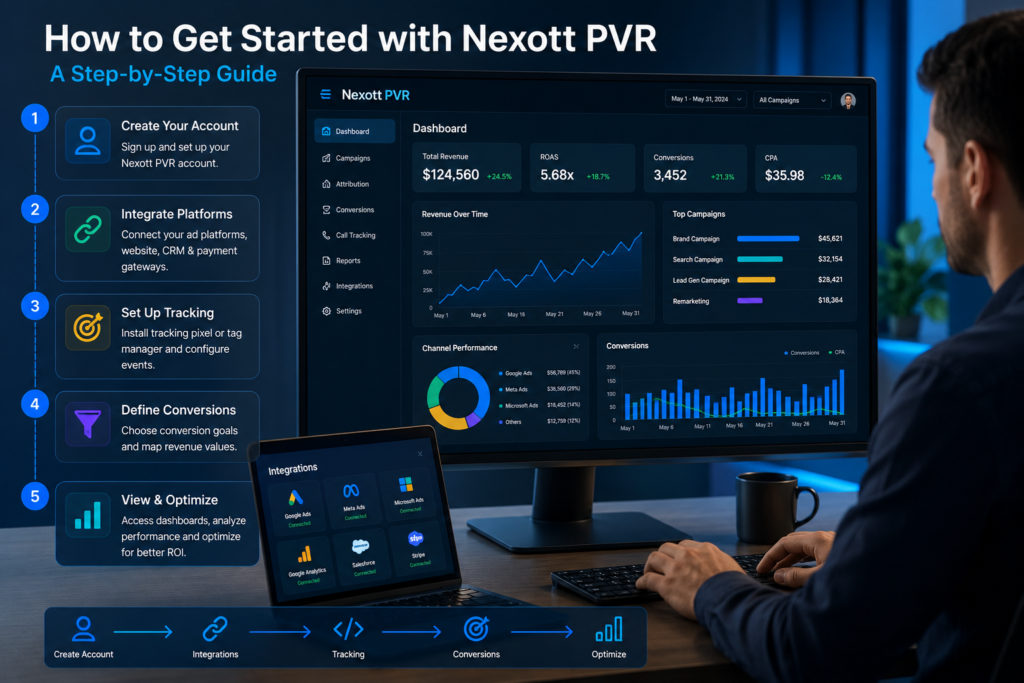
Implementing a new system can seem daunting. This simple, numbered guide will walk you through the process from sign-up to first insights.
Step 1: Account Setup and Initial Configuration
Begin by signing up for an account on the Nexott website. Select a pricing plan that matches your business volume and needs. Complete your business profile by entering your core conversion goals and average profit margins.
Step 2: Integrating Your Marketing Platforms
Navigate to the integrations section within your Nexott PVR dashboard. Connect your advertising accounts (e.g., Google Ads, Facebook Ads Manager) by following the OAuth prompts. This grants Nexott secure, read-only access to your campaign performance data.
Step 3: Setting Up Conversion Tracking
This is the most critical step for accurate validation. Install the Nexott tracking pixel on your website, typically via Google Tag Manager. Configure conversion events, such as “Purchase” or “Lead Form Submit,” within the Nexott interface. Connect your payment processor (Stripe, PayPal) or CRM (HubSpot, Salesforce) to import revenue data.
- Step 4: Define Your Attribution Model. Choose how credit for sales is assigned. Start with a data-driven or position-based model for balanced insights.
- Step 5: Configure Call Tracking (If Applicable). Activate call tracking and assign numbers to high-priority campaigns. Set up call conversion values based on your sales data.
- Step 6: Build Your First Dashboard. Use drag-and-drop widgets to create a CEO-level view. Focus on Key Performance Indicators (KPIs) like Net Profit, ROAS, and CAC.
- Step 7: Schedule Automated Reports. Set up daily or weekly summary reports to be emailed to your team. This keeps everyone aligned without manual work.
Pro Tips and Best Practices for Maximizing Results
To extract maximum value from tools, follow these expert recommendations. They will help you move from basic tracking to strategic optimization.
- Start with a Clean Data Foundation. Ensure your e-commerce tracking or CRM is correctly logging revenue before connecting to Nexott. Garbage in, garbage out.
- Use UTM Parameters Religiously. For offline or organic campaigns, use consistent UTM parameters. This allows Nexott PVR to categorize and attribute non-paid traffic correctly.
- Focus on “Profitable Keywords,” Not Just Clicks. Use the platform’s keyword-level profit reporting. Drastically reduce spend on high-click, no-profit keywords and reinvest in winners.
- Set Up Alerts for Anomalies. Configure alerts for sudden drops in ROAS or spikes in CAC. This enables proactive campaign management instead of reactive fixes.
- Conduct Weekly Profit Audits. Schedule 30 minutes weekly to review the “Campaign Profitability” report. Make immediate bid and budget adjustments based on the last 7 days of data.
Common Mistakes to Avoid When Using PVR Tools
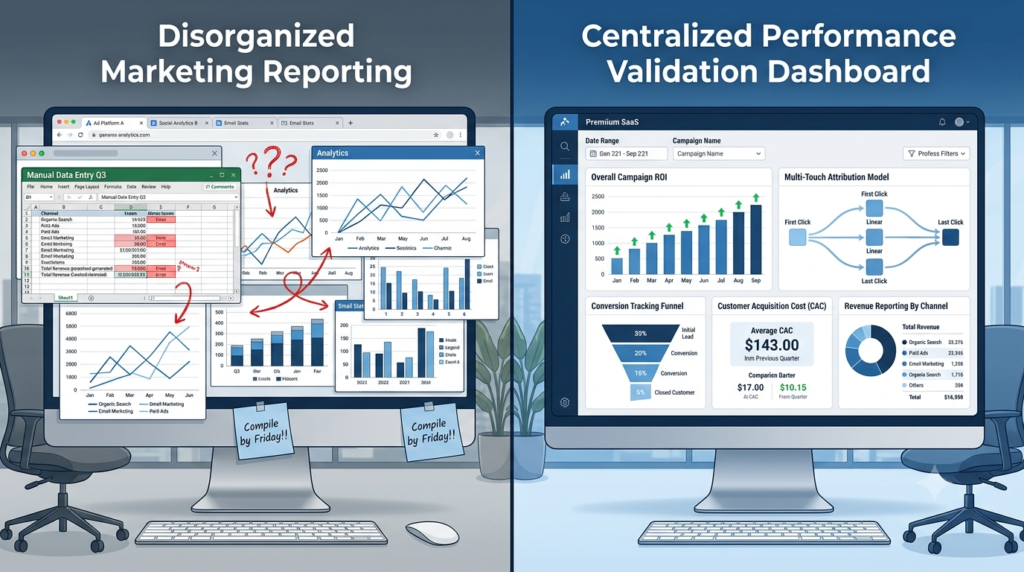
Even powerful tools can be misused. Avoid these pitfalls to ensure your investment in a PVR system pays off.
Mistake 1: Not Tracking Full-Funnel Conversions
Many users only track the final sale. This ignores valuable micro-conversions like webinar sign-ups or content downloads. Set up tracking for all key funnel steps within Nexott PVR. This allows you to optimize for lead quality and nurturing efficiency, not just closing.
Mistake 2: Ignoring Data Discrepancies
Small differences between platform data (e.g., Google Ads clicks vs. Nexott sessions) are normal. Large, consistent discrepancies indicate a tracking setup error. Regularly audit and reconcile numbers to maintain trust in your data. Investigate and fix any mismatch over 10-15%.
Mistake 3: “Set and Forget” Mentality
Implementing Nexott PVR is not a one-time task. Marketing landscapes and platforms change constantly. Regularly review your integration health, tracking tags, and attribution settings. Update the system when you launch new products or marketing channels.
Pro Tip: Create a standard operating procedure (SOP) for managing your PVR. Assign an owner to check data health weekly and run a full audit monthly. This prevents small errors from snowballing into costly misdecisions.
Nexott PVR Best Practices for Long-Term Success
Implementing Nexott PVR is only the beginning. Organizations that consistently achieve the best results treat performance validation as an ongoing process rather than a one-time setup.
One of the most effective practices is reviewing campaign profitability every week instead of waiting until the end of the month. Weekly reviews allow marketing teams to identify sudden changes in conversion rates, advertising costs, or return on ad spend before they significantly impact the budget.
Another recommendation is maintaining consistent tracking parameters across every marketing channel. Whether traffic comes from Google Ads, Meta Ads, email campaigns, or organic search, standardized naming conventions make reports much easier to analyze inside Nexott PVR.
Businesses should also establish clear Key Performance Indicators before launching campaigns. Tracking metrics such as Cost Per Acquisition (CPA), Return on Ad Spend (ROAS), Customer Acquisition Cost (CAC), and Lifetime Value (LTV) allows Nexott PVR to generate reports that focus on meaningful business outcomes instead of vanity metrics.
Finally, schedule regular audits of your integrations. As websites, payment gateways, and CRM systems evolve, verifying that every data source remains connected ensures Nexott PVR continues producing reliable reports throughout the year.
Frequently Asked Questions (FAQs)
What is PVR in digital marketing?
PVR stands for Performance Validation and Reporting. It’s a software process that tracks marketing spend and directly attributes it to revenue, proving campaign profitability beyond basic clicks and impressions.
How much does Nexott PVR cost?
Pricing is typically tiered based on monthly ad spend or tracked revenue. Plans often start for smaller businesses and scale up for large agencies. You must contact their sales for a custom quote.
Can Nexott PVR track phone call conversions?
Yes, a core feature is dynamic call tracking. It provides unique numbers per campaign, records calls, and attributes call-driven revenue back to the specific ad source.
What makes Nexott different from Google Analytics?
Google Analytics tracks user behavior. Nexott PVR focuses on profit validation by connecting ad cost directly to sales data from your CRM or payment system, offering true ROI.
Is Nexott PVR suitable for small businesses?
It is most valuable for businesses with significant or growing ad budgets (e.g., $5k+/month). The investment is justified by the savings from turning off unprofitable campaigns.
How long does setup take?
Basic integration can take a few hours. Full implementation with all conversions and custom reporting may take 2-3 days, depending on your tech stack complexity.
Is Nexott PVR Worth the Investment?
For organizations investing heavily in digital advertising, the cost of inaccurate reporting can quickly exceed the price of a dedicated performance validation platform. This is where Nexott PVR demonstrates its value.
Rather than making optimization decisions based solely on impressions, clicks, or website traffic, businesses using Nexott PVR gain visibility into the metrics that matter most: revenue, profitability, and customer acquisition costs. These insights allow marketing teams to allocate budgets more confidently while reducing wasted advertising spend.
The platform is particularly valuable for businesses managing multiple campaigns across different advertising channels. Instead of switching between numerous reporting tools, Nexott PVR centralizes campaign data into one dashboard, making decision-making significantly faster.
Although smaller businesses with minimal advertising budgets may not require advanced attribution immediately, companies experiencing rapid growth often discover that detailed performance validation becomes increasingly important as marketing complexity increases.
Ultimately, businesses looking for greater transparency, improved reporting accuracy, and better marketing ROI are likely to find Nexott PVR to be a worthwhile long-term investment.
Conclusion: Is Nexott PVR the Right Choice for Your Business?

After exploring its features, reporting capabilities, integrations, and real-world applications, it’s clear that Nexott PVR is more than just another marketing analytics platform. By connecting advertising data with actual business outcomes, it helps organizations move beyond vanity metrics and make decisions based on measurable profitability.
Whether you’re managing a growing e-commerce store, operating a digital marketing agency, running SaaS campaigns, or generating leads across multiple advertising channels, Nexott PVR provides the visibility needed to optimize budgets, improve return on investment, and confidently scale successful campaigns. Its advanced attribution models, automated reporting, and centralized dashboards simplify complex marketing data, allowing teams to focus on strategy instead of manual reporting.
While no reporting platform can replace a well-planned marketing strategy, Nexott PVR gives businesses the reliable insights required to continuously improve campaign performance. Companies that regularly monitor their data, validate conversions, and refine their advertising efforts are far more likely to maximize long-term growth.
If you’re looking for a smarter way to measure marketing success, Nexott PVR is a solution worth considering. Start by implementing the platform with your existing advertising channels, review your campaign performance consistently, and use the insights to eliminate wasted ad spend while investing more confidently in your highest-performing campaigns.
Ready to improve your marketing performance? Explore the capabilities of Nexott PVR, and if you’re looking for additional tools, expert guides, or solutions to optimize your digital marketing workflow, be sure to check out our other resources and recommended services to continue building a more profitable marketing strategy.