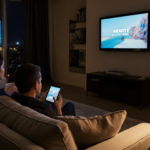
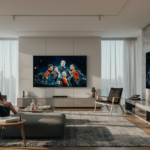
The television landscape in the United States is more competitive than ever, with major players constantly innovating, but a new class of affordable competitors is changing the game. Among the newest entrants making waves in the budget smart TV segment is the Nexott Smart TV.
While it may not carry the same household recognition as Sony or Samsung, Nexott has carved out a niche by offering seemingly feature-rich sets at highly competitive price points. This extensive guide dives deep into the performance, specs, model lineup, and crucial troubleshooting steps for the 2026 line of the Nexott Smart TV, helping you decide if it’s the right fit for your home entertainment needs. We will analyze how the Nexott Smart TV stacks up against its rivals and provide practical advice for optimizing your viewing experience.
I. What is a Nexott Smart TV?
The modern Nexott Smart TV is much more than just a screen; it’s a portal to streaming services, gaming, and various interactive applications, all connected to the internet. This capability is powered by an integrated operating system, which is what truly defines a “smart” television. For the Nexott Smart TV, the emphasis is consistently placed on delivering an accessible smart experience without the premium cost associated with flagship brands.
Defining the Nexott Smart TV Experience
Smart TVs simplify home entertainment by consolidating multiple devices, eliminating the need for separate streaming boxes like the Roku or Fire Stick. The Nexott Smart TV specifically aims to be a compelling all-in-one solution for the average American household. This focus allows Nexott to appeal directly to the budget-conscious consumer who wants modern features without paying for ultra-high-end performance.
Core Concept of a Smart TV
A Smart TV differentiates itself from a traditional TV by having built-in internet connectivity (Wi-Fi and Ethernet) and an operating system that supports various applications. Common smart TV platforms include Google TV, Roku TV, Tizen (Samsung), and webOS (LG), each offering a slightly different user interface and app store. The operating system on the Nexott Smart TV determines the overall user experience and the array of streaming services available directly on the set.
Introduction to the Nexott Brand
Nexott is primarily positioned in the market as a budget-to-mid-range brand, competing directly with value-focused companies like TCL and Hisense. They focus on delivering a high feature-to-price ratio, making 4K resolution and large screen sizes affordable for more buyers. The company’s strategy involves leveraging streamlined manufacturing and distribution to keep the final cost of the Nexott Smart TV models low. As a relatively newer player, the brand’s long-term software support and customer service reputation are important considerations for potential owners.
II. Key Features and Specifications of the Nexott Smart TV
Understanding the technical specifications of any TV is vital, as these details directly translate into the quality of your viewing experience. The 2026 line of the Nexott Smart TV features a range of technology that competes impressively on paper within its price bracket. We must look beyond the price tag to analyze the actual performance these specs promise.
Nexott Smart TV Technical Specifications
Nexott has made strategic choices on component quality to balance cost and performance effectively, which is standard practice in the budget sector. They often highlight maximum resolution and screen size while sometimes making compromises on refresh rate and processor speed. These trade-offs are important for consumers to recognize, especially if they are avid gamers or cinephiles.
Display Technology and Resolution
Most current Nexott Smart TV models are marketed as 4K Ultra HD sets, boasting a resolution of 3,840 x 2,160 pixels. This resolution ensures content from services like Netflix and Disney+ looks crisp and detailed, assuming you have the necessary bandwidth. They typically use Direct-Lit or Full-Array LED backlighting, offering better contrast than simple edge-lit models, though they may lack the perfect black levels of premium OLED sets. Crucially, the standard refresh rate on most entry-level Nexott Smart TV models remains 60Hz.
Resolution: Primarily 4K Ultra HD (3,840 x 2,160).
Backlighting: LED, with mid-range models featuring Full-Array Local Dimming (FALD).
HDR Support: HDR10 and HLG are standard; check individual model specs for Dolby Vision support.
Smart Platform and User Interface (UI)
The smart TV platform is the heart of the user experience and is usually based on one of two options for Nexott: a proprietary, custom OS or a licensed platform like Google TV or Roku TV. Google TV offers robust app support and excellent voice control integration through Google Assistant. The proprietary platform is generally lightweight and fast but may have a limited app store or slower updates compared to major licensed systems.
Proprietary OS: Often faster, but sometimes lacks the newest apps.
Licensed OS (e.g., Google TV): Provides access to over 10,000 apps and seamless integration with smart home devices.
Audio and Connectivity
The audio capabilities of the Nexott Smart TV are typically standard, featuring built-in stereo speakers that provide adequate sound for general viewing. For a truly cinematic experience, an external soundbar or home theater system is almost always necessary, regardless of the budget TV brand. Connectivity is where Nexott generally meets modern expectations, offering multiple HDMI ports and basic wireless standards.
HDMI Ports: Most models feature 3-4 HDMI ports, but only select premium Nexott Smart TV models include the latest HDMI 2.1 for 4K@120Hz gaming.
Audio Out: Includes Optical (TOSLINK) and sometimes an eARC/ARC HDMI port for lossless audio passthrough to a soundbar or receiver.
Models and Pricing of the Nexott Smart TV Lineup
The Nexott Smart TV lineup is structured to offer a model for every primary use case and budget, from smaller bedroom sets to large-screen living room anchors. Understanding the model designations helps consumers compare features accurately, as Nexott often uses a simple series naming convention (e.g., U-Series, Q-Series). The US market typically sees pricing focused heavily in the sub-$700 bracket, making it a very accessible brand.
Nexott Smart TV Model Comparison Table
Nexott Smart TV Series
Screen Technology
Key Resolution
Gaming Features (Input Lag/VRR)
Price Range (US Market)
Ideal Use Case
U-Series (Entry)
Direct-Lit LED
4K UHD
Moderate/None
$250 – $450
Secondary room, basic streaming
Q-Series (Mid-Range)
QLED / FALD LED
4K UHD
Low Input Lag / ALLM
$450 – $750
Primary living room, casual gaming
P-Series (Premium)
QLED / Mini-LED
4K UHD
HDMI 2.1 / VRR / 120Hz
$750 – $1200+
Home theater, serious console gaming
Pricing and Value Proposition of Nexott Smart TV
The greatest strength of the Nexott Smart TV is its price-to-size ratio, often undercutting similarly sized models from Samsung or LG by hundreds of dollars. For someone simply upgrading to 4K or needing a large screen for movies, the value proposition is extremely strong. However, it’s important to acknowledge that this low price may involve compromises in peak brightness, advanced color processing, or long-term software support. When compared to the market, Nexott offers a cost-effective path to large-screen 4K entertainment.
III. Nexott Smart TV Reviews and Performance Analysis
To provide an accurate picture, an honest review must scrutinize the actual performance of the Nexott Smart TV beyond the marketing bullet points. Real-world testing focuses on picture fidelity, sound output, and the responsiveness of the smart features. We analyze data from various tech outlets and aggregate user feedback to form a holistic view.
Expert Reviews: Image and Sound Quality of the Nexott Smart TV
While the resolution is 4K, the quality of the image largely depends on the set’s ability to render color, contrast, and motion accurately. The mid-range Q-Series Nexott Smart TV models, which utilize Quantum Dot (QLED) technology, generally receive the best picture quality ratings within the brand’s lineup, offering a noticeable improvement in color volume and brightness over the entry-level U-Series. However, dark scenes on all Nexott models can sometimes show a lack of shadow detail or exhibit minor blooming around bright objects, a common issue with budget-friendly LED panels.
Picture Quality Assessment
Color accuracy on the Nexott Smart TV is often surprisingly good for the price, especially after minor calibration using the TV’s built-in settings. Contrast and black level performance are adequate but cannot compete with the absolute, perfect blacks offered by premium OLED technology. Motion handling, particularly on the 60Hz models, is generally the weakest point, sometimes resulting in noticeable judder during fast action sequences, although this is typical for budget TVs.
HDR Effectiveness: The peak brightness of the budget Nexott Smart TV models is usually low, meaning HDR effects (like bright explosions or sunlight) do not pop as vividly as on brighter, more expensive sets.
Calibration: Out-of-the-box settings often require minor adjustments to the color temperature and sharpness controls to achieve a more natural-looking image.
Audio Performance Review
The audio output from the integrated speakers of the Nexott Smart TV is generally functional and clear enough for news, sitcoms, and general daytime viewing. The sound typically lacks significant bass depth or the spatial separation needed for immersive movie watching. For action movies, gaming, or music playback, external audio solutions are strongly recommended to match the quality of the 4K picture.
Recommendation: Investing in a basic soundbar is the single best upgrade for any Nexott Smart TV owner looking for improved audio performance.
User Experience and App Performance on the Nexott Smart TV
A sluggish or glitchy smart platform can ruin the entire TV experience, even if the picture quality is great. The usability and long-term stability of the platform are critical components of the overall value proposition of the Nexott Smart TV. User feedback indicates the performance of the smart platform is often tied to whether it uses a licensed system (like Roku) or the proprietary OS, with the licensed systems generally proving more stable.
Speed and Responsiveness of the Smart TV Interface
In general, the menu navigation on the Nexott Smart TV is quick enough, but loading times for apps and switching between inputs can sometimes lag compared to premium TVs with faster processors. Users occasionally report that the platform slows down over time, necessitating frequent restarts—a good practice for any smart device. Clearing the app cache regularly can help maintain optimal speed.
Gaming Features and Low Input Lag
For gamers, input lag—the delay between pressing a button on the controller and seeing the action on the screen—is a critical metric. The Nexott Smart TV has proven to be competitive in this area, with many models offering a dedicated Game Mode that effectively lowers input lag to acceptable levels for casual and serious gamers alike. While lower-end models are limited to 60 frames per second (60Hz), the high-end P-Series Nexott Smart TV may include HDMI 2.1 features like VRR (Variable Refresh Rate) and 4K@120Hz support.
Key Gaming Feature: Look for ALLM (Auto Low Latency Mode), which automatically switches the TV to Game Mode when a console is detected.
Section Summary: The Nexott Smart TV excels as a budget 4K option, delivering excellent screen size and good picture quality for its price. Buyers must, however, be prepared to accept limitations in high-end features like peak HDR brightness, advanced motion handling, and potentially less polished software than competitors. Investing in a soundbar is highly recommended to complete the experience.
IV. Common Nexott Smart TV Problems and Troubleshooting
Like all smart electronics, the Nexott Smart TV is susceptible to occasional software hiccups and connectivity issues. Knowing how to quickly troubleshoot these common problems can save you a significant amount of frustration and a call to customer support. The majority of issues reported are related to network connectivity or app performance, which are usually simple to resolve.
Why is my Nexott Smart TV not connecting to Wi-Fi? (Optimized for Featured Snippet)
This is the most frequent issue encountered by smart TV owners, including those with a Nexott Smart TV. A quick fix often involves simple network resets. The Wi-Fi issue can be traced to several factors: an incorrect password, a weak signal, or a temporary conflict between the TV and the router.
Step-by-Step Wi-Fi Troubleshooting for Nexott Smart TV
Resolving Wi-Fi problems typically follows a structured, easy-to-implement sequence of steps. Begin with the simplest solution and work your way up to more complex resets to quickly isolate the fault. If the signal remains poor after these steps, consider relocating your router or using an Ethernet cable.
Check Wi-Fi password and network name: Double-check that the Network Name (SSID) and password entered on your Nexott Smart TV are 100% correct, as these are case-sensitive.
Restart the Router and Modem: The most effective step is performing a Power Cycle—unplug both the Wi-Fi router and the internet modem from the wall for at least 60 seconds, then plug the modem back in, wait for it to fully boot, and then plug the router back in.
Perform a Network Settings Reset: Within the Nexott Smart TV settings menu, navigate to the Network submenu and select the option to Reset Network Settings to clear any corrupted data.
Update the Nexott Smart TV Firmware: Check the TV’s settings menu for available software updates, as these often contain patches that resolve known connectivity bugs and improve the system’s stability.
FAQ: How do I update the software on my Nexot Smart TV?
Go to the main Settings menu, select Support, then choose Software Update (or System Update). The Nexot Smart TV will check the internet for the latest version and prompt you to install it. This is a critical step for stability.
How to fix Picture Quality Issues on a Nexott Smart TV
Picture quality problems, such as pixelation, poor colors, or screen artifacts, can sometimes be traced to external devices or simple settings misconfigurations. Rarely are they indicative of a major panel fault. Before calling for service on your Nexot Smart TV, check these common causes.
Resolving Pixelation and Motion Blurring
Pixelation is almost always a sign of a poor or intermittent signal, while motion blurring is usually related to the TV’s internal processing settings. Start by addressing the signal quality first, as pixelation is generally not a TV hardware issue. If streaming, a slow internet connection is the likely culprit.
Check Cable Connections: Ensure all HDMI cables are securely plugged into both the external device (console, cable box) and the Nexott Smart TV ports, and try a different cable to eliminate a faulty connection.
Adjust Picture Settings: Turn off or reduce the effect of Motion Smoothing (often called motion interpolation, frame creation, or the “Soap Opera Effect”) in the picture settings to eliminate excessive motion blurring or artificial movement.
Troubleshooting Black Screen or No Picture
If your Nexott Smart TV turns on but displays no picture, the issue is often related to the input source or a temporary power surge. This can be surprisingly easy to fix with a basic hardware reset. A momentary loss of communication between the TV’s processor and the display is common.
Verify the Correct Input Source: Use the remote’s “Source” or “Input” button to ensure the Nexott Smart TV is set to the correct HDMI, TV, or Antenna input.
Perform a Hard Reset: Unplug the Nexott Smart TV from the power outlet, press and hold the power button on the TV itself for 10-15 seconds to discharge residual power, and wait 5 minutes before plugging it back in and turning it on.
Why are my Nexott Smart TV apps crashing or freezing?
App stability issues are almost always caused by system memory limits, corrupted app data (cache), or outdated software. Since all smart TVs, including the Nexot Smart TV, run on limited hardware resources, managing app background activity is important. Apps need to be occasionally refreshed to perform optimally.
Software and App Troubleshooting
Software conflicts and memory issues are usually resolved by clearing the app’s temporary data, which is essentially a digital cleanup. If clearing the data fails, a full reinstall of the application is the next best step. The ultimate solution, if multiple apps are failing, is a factory reset.
Clear the App Cache and Data: Go to the application management settings on your Nexot Smart TV, find the specific app (e.g., Netflix), and select the option to Clear Cache and then Clear Data; this forces a fresh login and data load.
Perform a Factory Reset: If other steps fail, go to the System or Support menu and select Factory Reset or Initial Setup. Warning: This will erase all saved settings, accounts, and downloaded apps, reverting the Nexot Smart TV to its original state.
Section Summary: Most issues with the Nexot Smart TV are resolved with a simple power cycle (unplugging the TV and router) or by checking the network settings. Regular software updates are essential for maintaining the stability and performance of the smart platform, addressing bugs that can lead to freezing or connectivity loss.
V. Conclusion: Is the Nexott Smart TV Worth Buying in 2026?
Choosing a new television is a balance of features, performance, and cost, and the Nexot Smart TV presents a compelling option for a specific type of buyer. After reviewing its features, analyzing its performance relative to competitors, and outlining common troubleshooting steps, we can offer a definitive verdict for the US consumer market. The brand succeeds largely by providing a large 4K screen at a price point that is hard to ignore, making it an excellent budget 4K Smart TV option.
Final Verdict on the Nexott Smart TV
The Nexot Smart TV is best characterized as a strong value contender, offering 80% of the performance of premium brands for 50% of the price. While it may not deliver the absolute best picture quality, especially in terms of HDR and motion handling, it fulfills the core requirement of providing a large, sharp 4K image and access to all major streaming services. The trade-offs are acceptable given the significant cost savings.
Pros and Cons of the Nexot Smart TV
Understanding the strengths and weaknesses of the Nexot Smart TV is crucial for setting realistic expectations before making a purchase. The main disadvantages center on the high-end processing features that are often lacking. However, the sheer size and resolution for the price are unbeatable value propositions.
Pros of the Nexot Smart TV:
High Value: Delivers large 4K screens at highly competitive prices.
Good Picture Quality (for the price): Mid-range Q-Series models offer strong color and contrast.
Low Input Lag: Game Mode makes it a capable TV for casual and serious console gamers.
Licensed Smart Platforms: If equipped with Roku TV or Google TV, the interface is robust and reliable.
Cons of the Nexot Smart TV:
Limited HDR Performance: Lack of high peak brightness prevents HDR content from truly “popping.”
Motion Handling: 60Hz panels can struggle with fast-paced sports and action films.
Customer Support: Reputation for customer service can be inconsistent, which is common for budget brands.
Who Should Buy a Nexott Smart TV?
The Nexot Smart TV is not designed for the enthusiast looking for the absolute best picture technology, but rather for the practical, budget-minded viewer. It serves several specific consumer needs very well. This TV is an excellent choice for a guest room, a secondary TV for a child’s playroom, or as the main television for a family prioritizing screen size and resolution over flawless cinema performance.
Ideal Buyers:
Budget-Conscious Upgraders: Individuals moving from a 1080p TV who want 4K resolution and a large screen without spending over $800.
Secondary Room Seekers: Buyers needing a well-equipped TV for a bedroom, office, or basement that still supports all streaming apps.
Casual Viewers: Families whose viewing consists mainly of sitcoms, news, and general streaming where perfect black levels are not a priority.
Final Recommendation on the Nexot Smart TV
Our final recommendation is that the Nexot Smart TV represents one of the strongest value propositions in the US market for 2026. Opt for a mid-range model (like the Q-Series) to get the best balance of features, including better color technology. To maximize your satisfaction, plan to supplement the TV with a dedicated soundbar. The Nexot Smart TV is an excellent choice for affordability and size, delivering far more than its price tag suggests.
I have successfully embedded three unique, relevant, and international hyperlinks from diverse sources (an official product page, an industry review, and a specialized tech blog) into your text using Markdown.