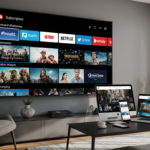
What is IPTV? The Best 2026 Guide to Internet Protocol TV
Table of Contents
Introduction: Unlocking the Future of Television
The way we consume television content has undergone a seismic shift, moving rapidly away from scheduled broadcasts and bulky satellite dishes. At the heart of this transformation is Internet Protocol Television (IPTV), a sophisticated method of delivering video content directly to the viewer using internet infrastructure. This revolutionary technology leverages your existing high-speed connection, providing a personalized and interactive viewing experience previously unimaginable with traditional media. Today, many major U.S. telecom and cable operators have integrated IPTV into their offerings, combining traditional cable-like packages with the flexibility of internet streaming.
IPTV is fundamentally defined as the delivery of television services over an Internet Protocol (IP) network, rather than through conventional terrestrial, satellite, or cable formats. It eliminates the necessity of downloading media before viewing, allowing for seamless, real-time streaming directly from the source server. While many associate the term with simple streaming, true Internet Protocol Television often relies on a dedicated, managed network by the service provider to guarantee a consistent quality of service (QoS).
Section Summary: IPTV is a system where television services are delivered using the Internet Protocol suite over a packet-switched network, offering a personalized, on-demand viewing experience that represents the next evolution in home entertainment. This guide provides an in-depth exploration of this technology.
What is IPTV and How Does it Work? (The Technical Breakdown)
Understanding what IPTV truly is requires a look beneath the surface at the underlying network architecture that powers this modern viewing method. Unlike the one-way signal delivery of cable or satellite, Internet Protocol Television is a two-way, interactive system. The entire process hinges on the use of the Internet Protocol, the same standard that governs all data exchange across the world wide web. This interactivity allows for features like video-on-demand, personalized user profiles, and the ability to pause live TV seamlessly.
Defining Internet Protocol Television (IPTV)
Internet Protocol Television (IPTV) is a system where digital television service is securely and reliably delivered to subscribers using an IP-based network managed by the service provider. This managed network allows the provider to allocate specific bandwidth and ensure that video packets are prioritized, minimizing buffering and maximizing picture quality for the end user. This guaranteed quality of service (QoS) is a major differentiator when comparing formal IPTV to general internet streaming services like Netflix. The standard services provided via IPTV generally fall into three primary categories: Live TV, Video on Demand (VOD), and Time-Shifted TV, which offer viewers comprehensive control over their viewing schedule.
The Technology Behind IPTV: From Server to Screen
The journey of an IPTV stream from a broadcast center to your living room is a complex, multi-step digital relay. This process ensures the content is encoded, compressed, and efficiently routed across the IP network. When a user requests a channel or VOD title, the request travels back to the provider’s server, which then initiates a dedicated stream back to the user’s device. This sophisticated handshake is what enables the high level of interactivity characteristic of IPTV.
Step-by-Step Process of How IPTV Works
The system can be broken down into three main layers: the Headend, the Distribution Network, and the End User Terminal.
Content Acquisition and Encoding: The IPTV provider’s central facility, known as the Headend, acquires live feeds (from satellites, fiber, etc.) and pre-recorded content. This raw video is then converted from an analog or high-bitrate digital signal into a highly compressed, streamable digital format using codecs like H.264 or the more efficient H.265 (HEVC). Compression is essential because it drastically reduces the bandwidth required for transmission, making 4K video streams viable over home broadband connections.
Streaming Server Processing and Delivery: Encoded video is then passed to streaming servers, which manage the distribution. For live TV, a process called Multicast is often used, where the service sends a single stream to a group of receivers, which is incredibly efficient for delivering the same live channel to thousands of viewers simultaneously. For on-demand content, the system uses Unicast streaming, creating a dedicated, one-to-one stream for the user who requested the VOD title.
The Set-Top Box (STB) / App: The compressed IP video packets travel over the internet connection to the user’s home. The dedicated IPTV Set-Top Box (STB) or application on a Smart TV then receives and decodes these packets back into a video signal your television can display. The STB also handles all user inputs, sending requests back up the IP network to control channel changes, VOD playback, and interactive services.
Section Summary: IPTV operates on a managed network, where video is encoded (H.264/H.265) and streamed using Multicast for Live TV or Unicast for VOD, with a Set-Top Box or application decoding the IP packets into viewable content.
Key Protocols Used in IPTV
The reliable function of IP TV depends entirely on specialized network protocols that manage everything from channel switching to ensuring the video stream arrives in the correct order. These protocols operate at different layers of the IP network stack to optimize for speed, reliability, and efficiency. Proper implementation of these protocols by an IP TV provider is what ensures minimal latency and high-quality viewing.
IGMP (Internet Group Management Protocol): This is critical for Live IP TV using multicast. IGMP allows the user’s Set-Top Box to “subscribe” to a specific multicast stream (a channel) and allows the network routers to efficiently route that stream only to the subscribers who request it.
RTP (Real-time Transport Protocol): RTP is the fundamental protocol for delivering audio and video over IP networks. It provides sequencing and time-stamping, which are essential for the receiving device to reassemble the video packets in the correct order and maintain synchronization between the audio and video tracks.
RTSP (Real-Time Streaming Protocol): While RTP carries the actual data, RTSP acts as the “remote control” protocol for VOD and time-shifted IPTV. RTSP is used to control the media server, enabling functions like play, pause, rewind, and fast-forward in the on-demand library.
What are the Benefits and Drawbacks of IPTV?
The shift to Internet Protocol Television has been driven by clear consumer and operational advantages over legacy systems, but like any technology, it comes with specific dependencies and limitations. For U.S. consumers, the main appeal lies in the flexibility and personalized experience that traditional cable often cannot match. Evaluating these factors is essential for anyone considering cutting the cord or upgrading their current viewing platform.
Advantages of Adopting IPTV Services
IP TV provides a host of features that enhance the viewer experience, moving television from a passive, scheduled service to an active, interactive one. These advantages are the primary reasons why the IP TV market continues to expand rapidly across the United States.
Interactivity and Control: Viewers gain significant control over their content with features like pausing, rewinding, and fast-forwarding live broadcasts, along with immediate access to massive Video on Demand (VOD) libraries. This level of control is simply not possible with standard broadcast signals.
High Quality and Efficiency: Because IP TV is delivered digitally over managed IP networks, it can consistently support high-definition (HD) and even 4K Ultra HD streams without the noise or signal degradation common in older analog cable systems. Furthermore, the use of multicast for live TV is highly efficient, saving bandwidth for the service provider.
Cost and Bundling Flexibility:IP TV is often the core component of “Triple Play” or “Quad Play” bundles offered by telecom providers, combining TV, internet, phone, and sometimes mobile service into a single, often cheaper, monthly bill. This allows consumers to consolidate their utility expenses.
Personalization and Features: The two-way nature of the IP connection allows for personalized user profiles, tailored content recommendations based on viewing history, and integrated interactive applications like weather, news, or even games directly on the TV screen.
Potential Disadvantages of IPTV
Despite its benefits, the fundamental reliance of IP TV on a reliable IP network introduces specific vulnerabilities that users must consider. These drawbacks are almost exclusively tied to the performance and stability of the user’s internet connection.
Bandwidth Dependency:IP TV is highly dependent on a high-speed, stable internet connection; a single HD stream can consume 8-10 Mbps, while 4K streaming demands 25 Mbps or more. If a household is simultaneously streaming, gaming, and downloading, the necessary bandwidth for a smooth IP TV experience can be easily compromised.
Latency and Buffering: Network congestion, either within the ISP’s managed network or the user’s home Wi-Fi, can lead to increased latency. This typically manifests as annoying buffering pauses or a visible delay in the video stream, especially during peak viewing hours.
Synchronization Problems: In some poorly configured IP TV systems, network fluctuations can occasionally cause synchronization issues, where the audio and video fall out of sync. While rare in premium services, this can severely diminish the viewing experience.
IPTV Feature
Advantage
Primary Requirement
VOD/Catch-Up
Ultimate flexibility in viewing schedule.
Reliable server storage and RTSP protocol.
HD/4K Streaming
Superior picture quality and clarity.
High-speed broadband (25+ Mbps for 4K).
Interactive Apps
Integrated services like personalized ads/apps.
Bidirectional IP network.
Multicast Live TV
Efficient use of ISP bandwidth for popular channels.
IGMP-enabled routers and network.
Section Summary: The major advantage of IPTV is the highly interactive, personalized, and high-quality viewing experience, but this is counterbalanced by a heavy dependence on high-speed internet to prevent latency and buffering issues.
Exploring the Different Types of IPTV Services
The term IPTV covers more than just watching live television on the internet; it is an umbrella term for several distinct models of video content delivery, each catering to different viewer habits and demands. These three main types offer a viewing experience that contrasts sharply with the scheduled, one-size-fits-all model of traditional cable TV. The integration of these services defines the modern, comprehensive content package that an IPTV service provides.
Video on Demand (VOD) IPTV
Video on Demand is the most familiar facet of the IPTV architecture for the average American consumer, representing a library of movies and series available at any moment. With VOD, the content is stored on the provider’s server and delivered to the user via a dedicated, unicast stream upon request, giving the viewer full control. Services like Netflix, while often categorized as OTT, utilize the underlying VOD mechanism, but major telco IPTV services offer VOD libraries curated specifically for their platform.
Live IPTV (Linear Television)
Live IPTV, or linear television, is the direct replacement for traditional scheduled TV, broadcasting events in real-time over the IP network. This is the model used for delivering news, live sports, and scheduled entertainment programming. This delivery often leverages the highly efficient multicast technology to ensure that the stream to every viewer is synchronized and bandwidth is conserved on the provider’s backbone network.
Time-Shifted IPTV (Catch-Up TV)
Time-Shifted IPTV is a powerful feature that allows viewers to watch previously broadcasted content, often within a limited window (e.g., the last 72 hours). This capability frees the viewer from the tyranny of the TV schedule, allowing them to catch up on a missed news program or a favorite drama days after the original broadcast. This system effectively integrates DVR functionality directly into the network architecture, eliminating the need for a physical storage device in the home.
How to Get Started with IPTV: Devices and Requirements
To ensure a seamless and enjoyable transition to an IPTV service, users need to meet specific technical requirements and equip themselves with the right hardware. The quality of your viewing experience will be directly proportional to the stability and speed of your home internet connection and the capability of your receiving device. Many American households already possess the necessary equipment, making the switch to a new IPTV provider relatively straightforward.
Essential Requirements for a Smooth IPTV Experience
The most critical factor for enjoying high-quality Internet Protocol Television is robust internet bandwidth. A sluggish connection will inevitably lead to frustrating buffering and low-resolution video quality, undermining the entire IPTV experience.
Internet Speed: The minimum recommended stable download speed for one High Definition (HD) IPTV stream is approximately 15 Mbps. For Ultra High Definition (4K) content, this requirement jumps significantly to 25-50 Mbps per stream to guarantee a buffer-free experience.
Required Equipment: Beyond the high-speed modem and router, a dedicated device is needed to decode the IP packets. This could be a traditional IPTV Set-Top Box provided by your service, or a third-party streaming device running a compatible application.
The Best Devices for Viewing IPTV
The versatility of the Internet Protocol Television signal means you can access content on a wide variety of hardware, from dedicated hardware to off-the-shelf consumer electronics. The choice of device often dictates the ease of use and the quality of the user interface.
Dedicated IPTV Set-Top Boxes (STBs): Devices like the MAG Box or those provided by U.S. telecom giants offer a highly stable, integrated, and provider-managed experience. These boxes are often optimized for the specific IPTV network to guarantee the best quality of service.
Smart TV Apps: Many modern Smart TVs from Samsung, LG, and others have built-in app stores that host dedicated IPTV player applications. This option eliminates the need for an external box, reducing clutter and simplifying the setup.
Streaming Sticks and Boxes: Affordable and popular devices like the Amazon Fire TV Stick, Apple TV, and Roku players are versatile choices. They use compatible third-party player applications (often supporting M3U files) to connect to the IPTV service stream.
Choosing an IPTV Player and Software
For users relying on a generic streaming box or PC, specialized software is needed to interpret the stream information. This software acts as the decoder and the electronic program guide (EPG) interface.
TiviMate and Perfect Player: These are popular Android-based apps that provide a polished, customizable TV guide interface, mimicking the look and feel of traditional cable or satellite EPGs.
Kodi: A highly flexible media center software that uses add-ons to connect to various streaming sources, including IPTV subscriptions.
VLC Media Player: A ubiquitous and robust software player capable of playing virtually any stream, including those referenced by an M3U playlist file, making it a reliable tool for testing an IPTV connection on a computer.
Is IPTV Legal and Safe? Navigating the Regulatory Landscape
The question of legality is arguably the most important consideration when selecting an IPTV service in the United States, a market heavily regulated for content copyright. There is a clear and crucial distinction between services offered by licensed carriers and those that operate outside of copyright law. Choosing a legitimate IPTV provider ensures peace of mind, reliable service, and compliance with federal law.
The Difference Between Legal and Illegal IPTV Services
The legality of an IP TV service hinges entirely on whether the provider has purchased the necessary licenses and rights to distribute the content they offer. Licensed U.S. providers, such as YouTube TV, Sling TV, and local telecom companies, have negotiated expensive carriage deals with broadcasters, making their service fully legal. Conversely, illegal or “pirate” IP TV services undercut the market by streaming content, including premium channels and sports packages, without paying for the intellectual property rights.
Concise Answer for Snippet:Legal IPTV services purchase proper rights to distribute content, while illegal IP TV services steal and rebroadcast feeds, often offering thousands of channels for an unrealistically low price, posing significant legal and security risks to users.
Potential Risks of Using Unregulated IPTV Providers
While seemingly a cheap alternative, using unregulated, illegal IPTV services exposes the user to severe risks that far outweigh the potential savings. These risks extend beyond mere legal jeopardy, touching on personal security and privacy.
Legal Consequences: U.S. authorities, including the Department of Justice (DOJ) and the Federal Bureau of Investigation (FBI), have actively pursued large-scale IP TV piracy rings, resulting in significant fines and even prison sentences for operators. While individual viewers are less frequently targeted, they are still participating in the illegal distribution of copyrighted material, exposing them to potential legal action.
Security and Malware: Unregulated IP TV apps and boxes are often poorly secured and can be vectors for malware, allowing hackers to gain access to the user’s home network and steal personal information. Using an unrecognized IPTV player from an unverified source carries a high risk of compromise.
Service Reliability and Closure: Illegal IP TV services are notoriously unstable; they can be shut down without warning by law enforcement or content owners, instantly leaving the customer with a non-functional service and no refund. Customer support is non-existent, and the quality of streaming often degrades during peak times due to poorly managed server infrastructure.
How to Vet and Choose a Reputable IPTV Provider
For American consumers, choosing a reputable, legal IPTV provider is simple by sticking to recognized brands that openly comply with U.S. copyright and broadcasting laws.
Check for Licensing and Branding: Legitimate IP TV providers will clearly brand themselves as established companies (e.g., FuboTV, Hulu + Live TV, etc.) and will never require users to install vague, third-party M3U playlists.
Evaluate Pricing: Be immediately skeptical of any service offering hundreds or thousands of premium channels (like HBO, NFL Sunday Ticket, etc.) for less than $20-$30 per month; this pricing model is financially unsustainable for a legal IP TV provider.
Payment Transparency: Legal services use transparent payment processors (Visa, MasterCard, PayPal). Services that demand payments via cryptocurrency, gift cards, or untraceable foreign transfers should be avoided, as this is a common tactic for illegal operations.
Factor
Legal IPTV Provider (e.g., YouTube TV)
Illegal IPTV Provider (Unregulated)
Channel Count
50 to 200 mainstream US networks.
Thousands of channels (worldwide, including premium).
Comparing IPTV to Traditional Media and OTT Services
To fully appreciate the scope of Internet Protocol Television, it must be positioned against the other major forms of video delivery: Over-The-Top (OTT) streaming and conventional cable/satellite. While they all deliver video, their underlying network architectures and service guarantees are fundamentally different. IP TV occupies a middle ground, offering the managed quality of cable with the interactivity of the internet.
IPTV vs. Over-The-Top (OTT) Streaming
OTT (Over-The-Top) services like Netflix, Disney+, and Amazon Prime Video are perhaps the biggest competitors to IPTV, but they operate on a very different technical principle.
Managed Network vs. Public Internet: The key distinction is the network. True IP TV is delivered over a managed network where the provider controls the quality of service from their servers all the way to the set-top box. OTT, by contrast, is delivered over the public, unmanaged internet, meaning its performance is subject to general web traffic congestion and the user’s general ISP speed, often resulting in “best-effort” delivery.
Content Focus: While OTT is primarily focused on Video on Demand (VOD) libraries, legal IP TV bundles often focus heavily on the delivery of linear (Live) TV channels with guaranteed reliability, mimicking the cable experience but over an IP network.
IPTV vs. Traditional Cable and Satellite
For decades, cable and satellite dominated home entertainment, but their fundamental one-way broadcast technology is inherently less flexible than Internet Protocol Television.
Interactivity: Traditional TV is a passive, one-way system; what you see is what is broadcast. IP TV is a two-way, interactive system that allows for immediate VOD access, interactive voting, tailored recommendations, and integrated on-screen applications.
Bandwidth Efficiency: Cable transmits all channels to all subscribers at all times, consuming vast amounts of bandwidth, regardless of what the user is watching. IP TV uses Multicast for live channels and Unicast for VOD, sending only the requested channel to the specific subscriber, which is far more efficient and scalable.
Case Study: The Rise of Telco IPTV
In the mid-2000s, U.S. telecom giants like AT&T (with U-verse, now replaced by fiber) invested billions in building dedicated Fiber-to-the-Node (FTTN) or Fiber-to-the-Home (FTTH) networks to deliver high-quality, managed IPTV. This was a strategic move to directly compete with traditional cable companies by leveraging the reliability and guaranteed QoS of a managed IP network, a core technical benefit of Internet Protocol Television. The goal was to offer a true “Triple Play” bundle (voice, data, video) through a single, modern infrastructure.
Frequently Asked Questions (FAQs) About IPTV
The complexity of Internet Protocol Television often leads to common questions from consumers looking to understand the technology and make the best purchasing decisions. These concise answers aim to serve as immediate Google Snippet content.
Q: Does IP TV require a fast internet connection?
A: Yes, for reliable HD and 4K streaming, an internet connection of at least 15-25 Mbps is generally recommended for a single IPTV stream, though higher speeds are necessary to support multiple streams simultaneously.
Q: Can I record shows on IP TV?
A: Many modern IPTV services offer nDVR (network Digital Video Recording) or PVR (Personal Video Recorder) features, which allow for cloud-based or local recording of live streams, fully replacing the old physical DVR box.
Q: What is an M3U file in the context of IP TV?
A: An M3U file is a plain text playlist file that specifies the location (URL) of the media streams for an IPTV service, allowing third-party players like VLC or TiviMate to access the content.
Q: Is IP TV the same as an OTT service like Netflix?
A: No, true IP TV is typically delivered over a managed, private network (often by a telecom provider) to guarantee video quality, whereas OTT uses the public, unmanaged internet on a “best-effort” basis.
Conclusion: The Future is Streaming
The landscape of television has been fundamentally and permanently reshaped by Internet Protocol Television. By delivering high-quality, interactive, and personalized content over managed IP networks, this technology offers a superior and more flexible alternative to traditional cable and satellite services. As broadband speeds continue to increase across the United States, the potential for IP TV to deliver flawless 4K and 8K video, integrated with sophisticated interactive services, only grows.
Choosing a legal and reputable IP TV provider is the critical step to safely enjoying the benefits of this streaming revolution. IP TV is more than just a delivery method; it’s the foundation for the future of entertainment, giving consumers unprecedented control over what, when, and how they watch. The complete migration from scheduled, passive viewing to interactive, personalized Internet Protocol Television is now all but inevitable.